
The Perfect Eco-Friendly Garment Decoration Combo
The Perfect Eco-Friendly Garment Decoration Combo

When the garment and the decoration are both built around responsible manufacturing, the result is something worth wearing with pride.
Here's why Supacolor & Allmade Apparel are the combination your eco-conscious business has been looking for:

Heat Transfers Built the Way Apparel Should Be Made. 🌎
Decorated apparel has a chemistry problem. Most heat transfers on the market are produced using plastisol inks and chemical-heavy digital processes that introduce substances into the finished garment that have no business being in contact with skin. The decorated apparel industry has treated this as standard for decades, and most consumers have no idea what's in the transfers on their clothes.
Supacolor was built around a different standard.

Water-Based Inks. 💧
The Supacolor hybrid process uses water-based inks in both the screen printing and the digital printing stages. Water-based inks use water as the carrier for pigment rather than petroleum-derived solvents, which means significantly lower levels of volatile organic compounds (VOCs), lower toxicity in production, and a safer end product for the person wearing it.
This is a meaningful distinction from plastisol inks, which are PVC-based and require chemical solvents for cleanup and processing. It's also a distinction from many digital heat transfer inks, which rely on chemical formulations that introduce harmful substances into the transfer and ultimately into the garment.
Water-based inks perform at a high level. They also perform more responsibly.

OEKO-TEX Standard 100 Certified. 🥇
Supacolor holds OEKO-TEX Standard 100 certification, one of the most rigorous independent certification standards in the textile industry. OEKO-TEX Standard 100 tests every component of a product for harmful substances, including regulated and non-regulated chemicals, and certifies that the finished product is safe for human use at every contact level, including direct skin contact.
For decorators and their customers, this means something concrete: Supacolor heat transfers have been independently verified to be free from harmful substances. The certification covers not just what goes into the transfer during production, but what remains in the transfer when it arrives at your shop and when it ends up on a garment your customer wears.
In an industry where most suppliers don't hold this certification, it represents a real and verifiable standard of safety, for the people pressing the transfers and for the people wearing the finished product.

Carrier Sheets That Can Be Recycled. ♻️
The PET film used in Supacolor heat transfers is a recyclable material. PET (polyethylene terephthalate) is one of the most widely recycled plastics in the world. While Supacolor does not hold a specific recyclable product certification, the material itself is recyclable, and shops looking to reduce their production waste have the option to collect and recycle their backing sheets rather than sending them to landfill.
It's a small step, but small steps in production add up.

Feel Your Impact™ with Allmade. 🌎
Every Allmade t-shirt and blank apparel piece is made from a blend of three materials chosen specifically because of how they're sourced and what they replace. Recycled polyester made from plastic bottles keeps that material out of landfills and waterways.
Modal made from renewable beech trees uses a fiber that grows back and requires significantly less water than conventional cotton to produce. Organic cotton rounds out the blend with a crop grown without synthetic pesticides or fertilizers.
Compared to the average t-shirt, every Allmade garment helps reduce carbon footprint, save water, and reduce waste. That's not a marketing claim. It's the math of choosing different inputs at every stage of production.
But Allmade's impact doesn't stop at the fabric.
Their manufacturing is done in ethical factories built around a different standard for what a supply chain relationship should look like. With every Allmade t-shirt, a portion of that purchase goes toward investing in the communities where those factories operate, through access to education, safe housing, and environmental protection. The people making the shirts and the communities around them are part of the product, not a footnote to it.
When a decorator chooses Allmade as their blank, they're choosing a garment that was built to do more than hold a design. It was built to help save the planet.

When the Garment & Decoration Both Do Their Part. 🤝
The argument for combining Supacolor with Allmade isn't just that both brands care about sustainability. It's that they address different parts of the same problem.
Allmade handles the garment: the fiber, the water use, the carbon footprint, and the communities involved in manufacturing. Supacolor handles the decoration: the inks, the chemical safety, the certification, and the process used to apply artwork to that garment.
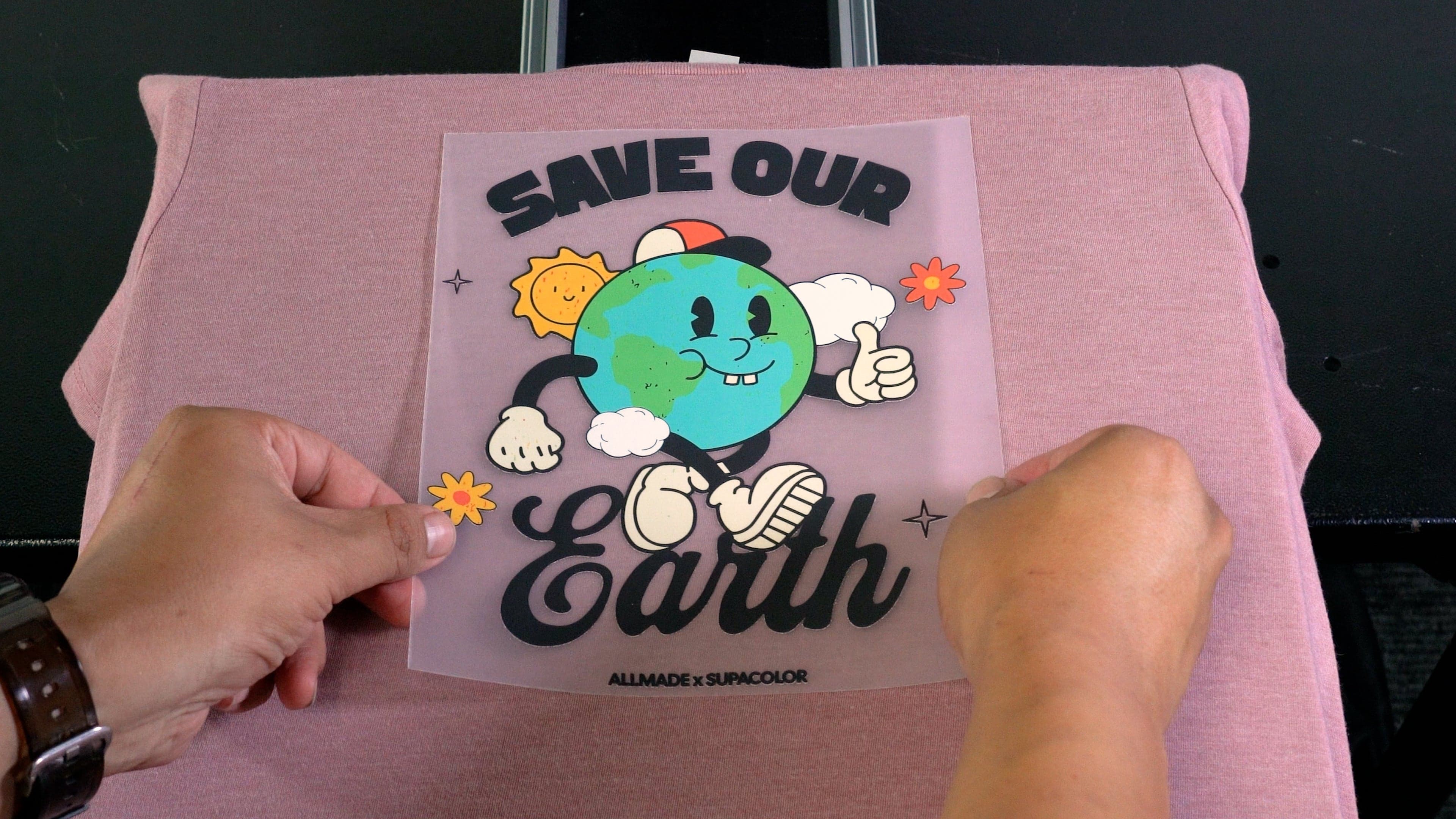
When a decorator presses a Supacolor heat transfer onto an Allmade blank, the finished product is one where every component has been considered. The shirt was made from recycled bottles and renewable fibers. The decoration was applied with water-based inks and meets one of the strictest safety standards in the textile industry. The person wearing it can feel that.
For shops building a product line around responsible sourcing, or for decorators working with clients who want to align their branded merchandise with their values, this combination delivers on both sides of the equation without asking you to compromise on print quality, durability, or the performance of the finished garment.

A Higher Eco-Friendly Standard. ✅
For a long time, the conversation around sustainable apparel stopped at the blank. The shirt was eco-friendly, but the decoration was whatever it was.
That gap is worth closing. Supacolor and Allmade close it.
If your shop is ready to offer clients a fully considered product, from blank to press to finished piece, this is where that conversation starts.
Let's save the planet together.